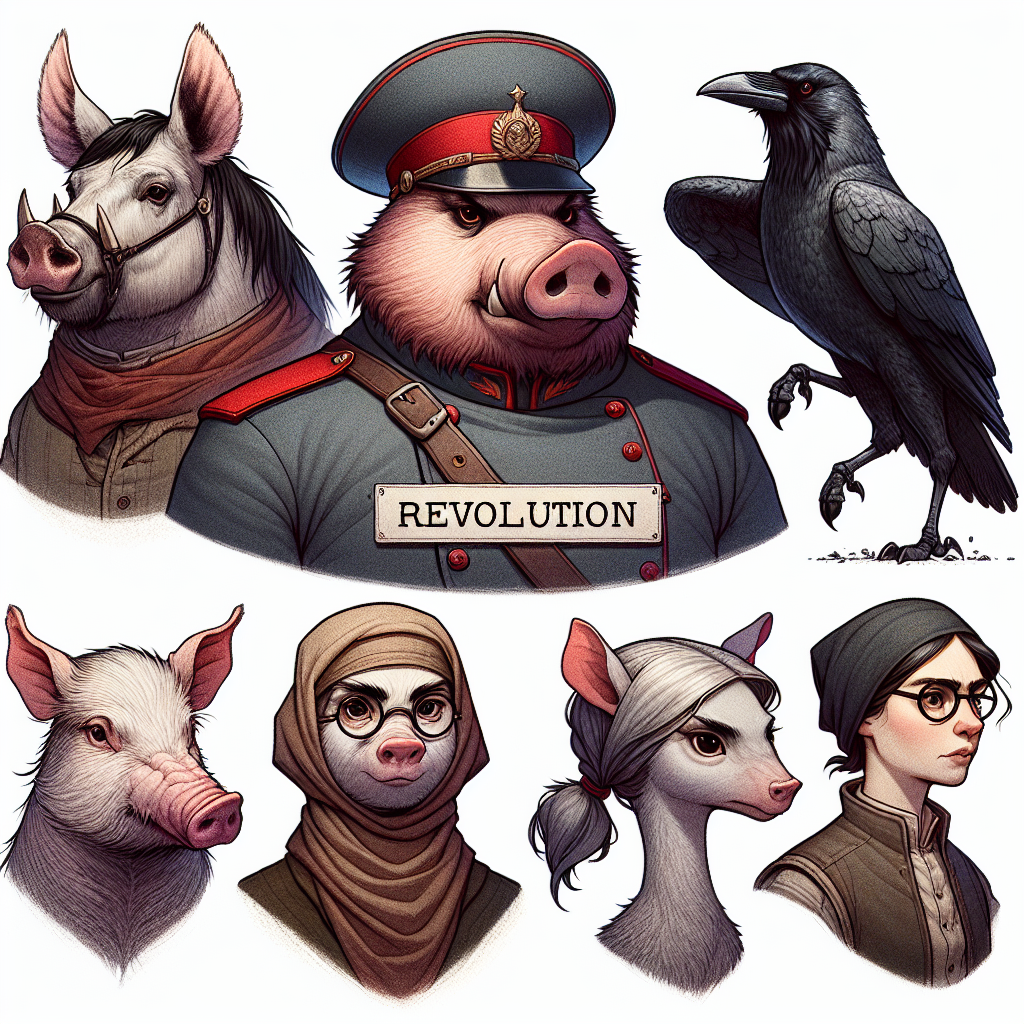
“Animal Farm” (original title: “Animal Farm”) is a political allegory written by George Orwell, first published in 1945. The narrative unfolds on a fictional farm, where the animals, dissatisfied with human oppression, revolt and take control of the property. The story reflects themes such as the struggle for power, corruption, and the betrayal of ideologies, serving as an incisive critique of totalitarianism and the failure of communist regimes, especially in reference to the Russian Revolution and its consequences. The work is widely recognized for its cultural and literary relevance, being studied in various educational and social contexts around the world.
Known Characters
Primary Characters
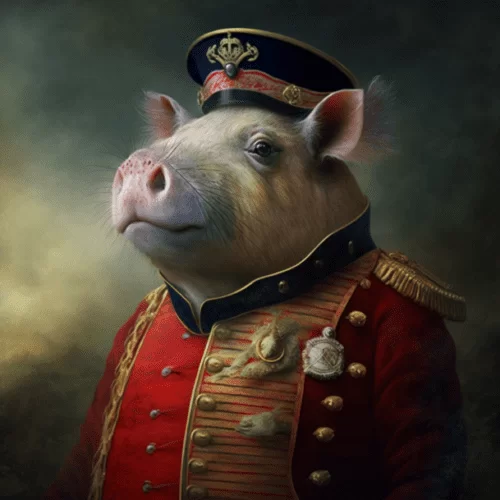
- Napoleon (Napoleon): Napoleon is one of the leaders of the revolution on the farm, a pig who represents Joseph Stalin. He is cunning, manipulative and ruthlessly ambitious, using tactics of fear and propaganda to maintain control over the other animals. As the story progresses, Napoleon becomes increasingly authoritarian, distorting the original principles of the revolution and replacing human leaders with an oppressive regime within the farm itself.
- Snowball (Snowball): Snowball is another pig who initially emerges as a leading figure in the revolution, representing Leon Trotsky. He is intelligent, idealistic and has a clear vision of a better future for all the animals. However, his ideas are systematically sabotaged by Napoleon, who expels him from the farm and distorts the narrative to consolidate his power. The struggle between Napoleon and Snowball exemplifies the fight for control at the heart of the revolutionary movement.
- Old Major: Old Major is an old pig who catalyzes the revolution by exposing the oppression the animals face under human rule. Representing Karl Marx and Vladimir Lenin, he presents the utopian vision of a society where all animals are equal. His death before the revolution initiates the animals’ search for his ideals, but his leadership and teachings are gradually distorted after Napoleon’s rise to power.
Secondary Characters
- Squealer: Squealer is a pig who serves as the propagandist for Napoleon’s regime. With his rhetorical skills and manipulation of the truth, he distorts the facts to justify the government’s actions, maintaining the loyalty of the animals. Squealer represents the controlled press that alters reality to maintain power.
- Boxer: Boxer is a strong and loyal workhorse who embodies the idealism and work ethic of the middle-class workers. He represents the working class who, despite their diligence and dedication, are often exploited by the leaders. His catchphrases “I will work harder” and “Napoleon is always right” symbolize the blind devotion to the party, making his final betrayal by Napoleon one of the most tragic moments in the story.
- Mollie (Mollie): Mollie is a vain and self-indulgent mare who is more concerned with luxuries and comforts. She represents those who prefer to cling to the status quo and not commit to the struggle for equality. Her eventual departure from the farm in search of a more comfortable life exposes the fragility of revolutionary ideologies in the face of individual selfishness.
Occasional Characters
- Mr. Jones: Mr. Jones is the human owner of the farm before the revolution. His neglect and abuse represent the oppression the animals suffer. Although he does not appear frequently in the narrative, his symbolic figure establishes the contrast between the old regime and the new order that will emerge.
- Napoleon’s Dogs: Napoleon’s dogs act as his personal guards and the armed wing of his tyranny. They represent the mechanisms of repression used by totalitarian regimes to maintain control and eliminate opposition. The dogs’ blind loyalty to their master reflects the dynamic between the oppressors and the oppressed.
List of Books Where the Characters Appear
- “Animal Farm”: Author: George Orwell. Original Language: English. Publication Year: 1945. Description: This work is a political fable that narrates the story of a farm where the animals revolt against their human oppressors to establish an egalitarian society, only to find a new form of oppression under corrupt leadership. The satire is a critique of the events of the Russian Revolution and totalitarianism.
Possible Inspired Works and Inspirations
- “1984”: by George Orwell: Another renowned work by the author that explores themes of authoritarianism, surveillance, and social control in a dystopian society.
- “Doctor Zhivago”: by Boris Pasternak: An epic that addresses the effects of the Russian Revolution on the lives of individuals, reflecting the tragedies that emerge from ideological conflicts.
- “The Farmer of Death”: by Teresa L. Hagan: A work that draws inspiration from the themes of struggle and exploitation examined in “Animal Farm”, bringing a new perspective on social oppressions.
- “We”: by Yevgeny Zamyatin: A dystopian novel that discusses governmental control and the preservation of individuality.
“Animal Farm” continues to be an impactful work, illuminating the constant struggle for freedom and equality, while warning about the risks of ideological corruption and the erosion of truth in the pursuit of power.