Book Summary – “The Boy Who Harnessed the Wind”
At the heart of the book “The Boy Who Harnessed the Wind” is the captivating and inspiring narrative of an entrepreneurial African teenager who built a windmill from scrap to bring electricity to his entire community.
William Kamkwamba was born in Malawi, a country where magic reigned and modern science was a mystery. It was also a land marked by drought and famine, a place where hope and opportunity were hard to come by. But William had read about windmills in a book called “Using Energy,” and he dreamed of building one that would bring electricity and water to his village, transforming his life and those around him. His neighbors may have mocked him and called him “misala” – crazy – but William was determined to show them what a little determination and ingenuity could do.
Fascinated by electricity since childhood, William set his sights on studying sciences at the best boarding schools in Malawi. But in 2002, his country was hit by a famine that left his family’s farm devastated and his parents penniless. Unable to pay the eighty-dollar annual tuition fee for his education, William was forced to drop out of school and help his family search for food, as thousands across the country starved to death.
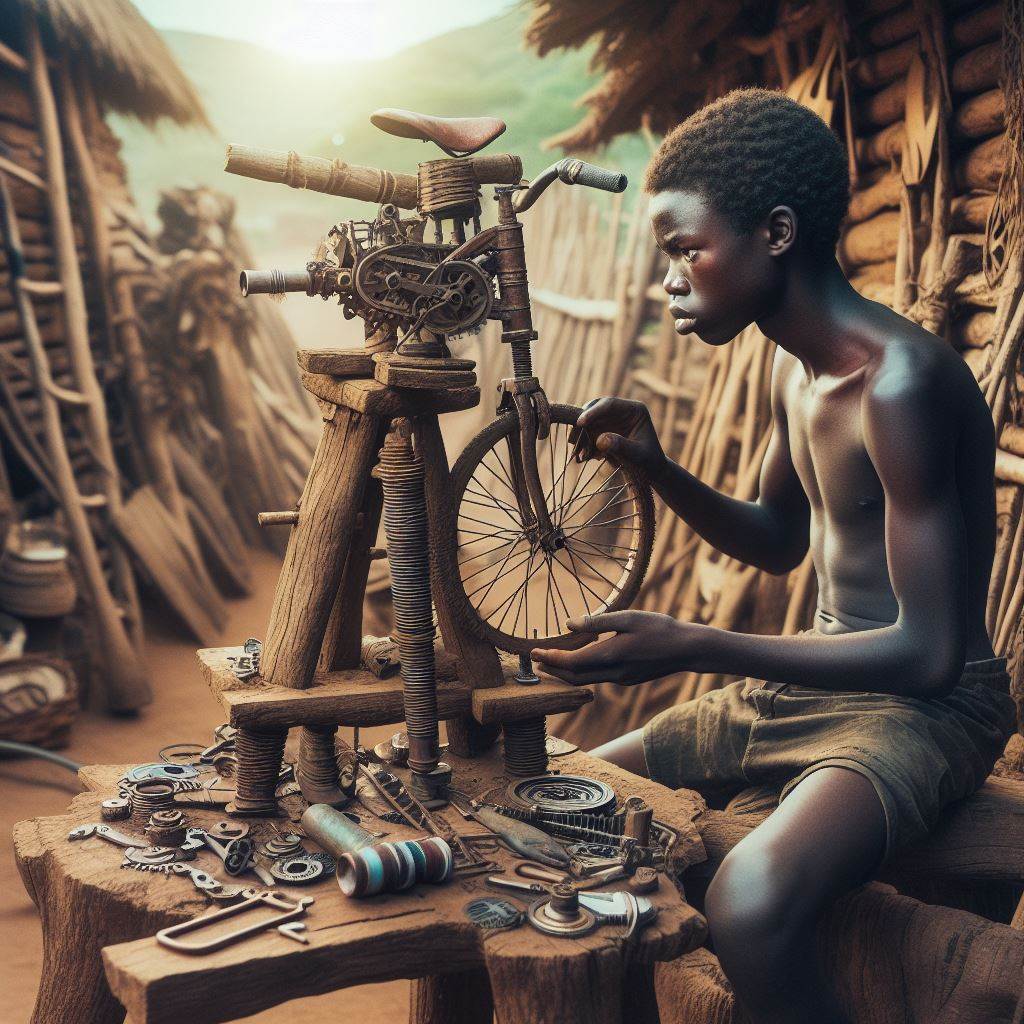
However, William refused to give up on his dreams. With nothing but a handful of cornmeal in his stomach, a small stack of forgotten science textbooks, and an armor of curiosity and determination, he embarked on a daring plan to bring his family luxuries that only two percent of Malawians could afford and the West considered a necessity – electricity and running water. Using recycled metal, tractor parts, and bicycle halves, William forged a rudimentary windmill, an unlikely invention and small miracle that eventually powered four lights, complete with homemade switches and a circuit breaker made of nails and wires. A second machine powered a water pump that could combat the drought and famine that loomed every season.
Soon, news of William’s “electric wind” reached beyond his home, and the boy once called crazy became an inspiration to people around the world.
This is the remarkable story of human ingenuity and its power to overcome overwhelming adversity. “The Boy Who Harnessed the Wind” will inspire anyone who doubts the power of individual ability to change one’s community and improve the lives of those around them.

Digital illustration inspired by the book
Summary of the Main Characters of “The Boy Who Harnessed the Wind”
- William Kamkwamba – The author, subject, and protagonist of the narrative. William’s characteristics of innovation, perseverance, and love for science drive him to find solutions to the problems in his life. The windmill, his iconic invention, provides him with access to higher education and contact with like-minded inventors and innovators.
- Trywell Kamkwamba – William’s father. Trywell was a struggling merchant who found religion to overcome alcohol and gambling. He is a fundamental influence on William, whose rational mind contrasts with the magical thinking of his Malawian community. Trywell’s rationality, sacrifice, and support shape William’s path to becoming a scientist.
- Agnes Kamkwamba – William’s mother. Agnes is a caretaker who finds creative solutions to save her struggling family, such as selling cakes at the market. While she loves and supports William, she fears another famine and sometimes doubts his pursuits.
- Geoffrey – William’s cousin and Uncle John’s son. Geoffrey often accompanies William to school, hunting, or scavenging the junkyard. His unwavering support and encouragement help William persevere.
- Gilbert – William’s friend and Chief Wimbe’s son. Gilbert supports William and buys him parts like the bicycle dynamo. Gilbert’s generosity aids William in reaching his goals.
- Chief Wimbe – Gilbert’s father and the village leader. Chief Wimbe is a pillar of his community and a fearless leader during the famine. He provides food to the starving and pleads with the president for help, even when beaten for the attempt.
- President Muluzi – The President of Malawi. In a flagrant act of corruption, President Muluzi sells the country’s grain reserves and cuts aid to farmers. He refuses to acknowledge the famine until it has already passed.
- Uncle John – William’s uncle, Trywell’s brother, and Geoffrey’s father. Uncle John built the family’s farming business and convinced Trywell to join him. His sudden death marks a fundamental shift in William’s life.
- Dr. Hartford Mchazime – Head of Malawi’s Teacher Training Activity. Dr. Mchazime becomes William’s mentor and is responsible for bringing William’s story to light. Dr. Mchazime supports William’s talents, fights for his education, and prepares him for the new direction his life is taking.
- Tom Reilly – Corporate sponsor organizer at TED. Tom takes William under his wing at the conference. He introduces William to technological advancements, helps with his presentation, assists with his education, and takes him to America.
Recommendation of Who Should Read This Book
- Inspirers and Dreamers: The story of William Kamkwamba is an inspiring testament to the power of human resilience and determination. Those who find inspiration in stories of overcoming adversity will find in this book a wellspring of motivation to pursue their own dreams, no matter how daunting they may seem.
- Science and Technology Enthusiasts: The book delves deeply into William’s journey of scientific knowledge and his passion for innovation. Readers interested in science, technology, engineering, and mathematics (STEM) will find it fascinating to follow the creative process and inventive solutions William develops to address the challenges of his community.
- Sustainable Development Advocates: The story of William’s windmill highlights the importance of sustainability and the use of renewable resources to improve living conditions in rural communities. Readers concerned with environmental issues and interested in clean energy solutions will find an inspiring story about how innovation can drive sustainable development.
- Educators and Students: The book offers a valuable perspective on the challenges faced by the education system in developing countries and the transformative power of education. Educators can use William’s story as a tool to inspire and motivate students to pursue their academic and personal goals, while students may identify with William’s journey of self-discovery and growth.
- Leaders and Agents of Change: The story of William Kamkwamba illustrates the positive impact a determined individual can have on their community and the world. Community leaders, social entrepreneurs, and anyone interested in making a difference in their own communities will find in this book a source of inspiration and a powerful reminder of the transformative potential of commitment and innovation.
When Was It First Published and by Whom?
“The Boy Who Harnessed the Wind” was first published in 2009. The book was written by William Kamkwamba in collaboration with Bryan Mealer.
Beyond the Book
The Moving Windmills Project
Inspired by William Kamkwamba’s story, the Moving Windmills Project was founded in 2008 to support economic and educational development projects in rural areas of Malawi. The non-profit organization works with local leaders to provide food, clothing, shelter, sanitation, health, education, and community building.
Completed projects include:
- Wind and solar power for village homes
- Rebuilding of village home roofs
- Rain and fire protection
- Water sanitation and hygiene education
- Disease prevention
- Distribution of malaria-preventing bed nets
- Distribution of bedding
- Heating and pest protection
- Solar-powered water well and pump
- Drip irrigation
- Improved food supply with multiple maize harvests and vegetable gardens
- Running water taps…